Rear View Mirror Camera vs Backup Camera: Which One Should You Choose
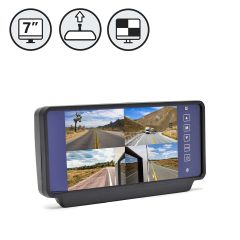
Rear visibility technicians have moved way past basic mirrors, but the terms still get mixed up. A rear view mirror camera and a backup camera often get treated like the same thing or as upgrades of each other.
If you compare the two, the real question isn't about which one is better, but what kind of visibility you are trying to fix.
One is designed to give you a clearer, uninterrupted view behind you while driving, the other focuses on short-range accuracy when reversing.
To understand which one is right for you, here is a detailed explanation of both systems.
What is a Rear View Mirror Camera & Backup Camera?
Both cameras help in improving rear visibility in their own way. But the way they blend into your driving routine makes all the difference.
Rear View Mirror Camera
Think of this as an upgraded version of your regular mirror. Instead of depending only on reflection, it shows a live feed from a camera mounted at the rear of the vehicle.
So even if your back seat is full or the trunk is packed, your view stays clear.
- Shows a real-time rear view while you’re driving
- Wider angle than a standard mirror, so you see more of the road behind
- No obstruction from passengers or cargo
- Can usually switch between a normal mirror and a digital view
- Helps cut down blind spots, especially in larger vehicles
Backup Camera
A backup camera is simpler and comes into play when you shift into reverse, giving a clear look at what is directly behind the vehicle.
- Kicks in as soon as you shift into reverse
- Shows a wider view of what’s right behind your vehicle
- Usually comes with on-screen lines to help you park
- Helps you notice things like curbs or low obstacles more easily
- Designed for reversing situations, not regular driving
Read More: Why Choose Rear View Safety Backup Camera Systems for Your Vehicle
Rear View Mirror Camera vs Backup Camera: What Really Sets Them Apart
They both help you see what’s behind the vehicle, but they don’t really step in at the same time or for the same reason.
A backup camera is meant to assist while you reverse your vehicle, whereas a rear view mirror camera helps in staying aware.
|
Feature |
Backup Camera |
Rear View Mirror Camera |
|
Display Location |
Dash screen or infotainment |
Clips on or replaces your rearview mirror |
|
Activation |
Mostly only in reverse |
Reverse or can stay on while driving |
|
Viewing Comfort |
You have to look down at the dashboard |
Eyes stay forward in the normal mirror spot |
|
Best For |
Small cars, basic parking |
SUVs, trucks, RVs, towing |
|
Installation |
Often needs wiring to reverse the lights |
Usually just clips on, which makes it much cleaner |
|
Night Vision & Glare |
Varies, glare can be pretty bad |
Mirror housing helps cut down headlight glare |
|
Extra Features |
Grid lines for parking |
Auto-dimming, compass, temp display |
Must Read: Rear View Safety at Work Truck Week 2026: Fleet Safety Solutions and Camera Systems
How Do Both Cameras Handle Different Problems?
Looking at real driving situations makes it a lot easier to understand which camera helps handle common pain points.
|
Situation |
What’s the Issue |
What Works Better |
|
Tight parking spots |
You’re guessing the distance and hoping you don’t clip something |
Backup camera gives a clear look right behind, so parking feels more controlled |
|
The rear view isn’t clear |
Something inside the vehicle blocks your mirror view |
Rear view mirror camera shows what’s actually behind, not what’s visible through the glass |
|
Driving with a trailer |
You want to keep an eye on what’s happening behind while moving |
Rear view mirror camera stays on, so you’re not relying only on side mirrors |
|
Looking away from the road |
Glancing at the dashboard breaks your focus for a moment |
Rear view mirror camera keeps the view where you already look |
|
Night driving |
Headlights from behind make it harder to see properly |
The rear-view mirror camera tends to give a clearer, more stable view |
Common Buying Mistakes to Avoid Before You Decide
Here is what you should keep in mind when you choose the camera for your fleet.
1. Buying Only on Price
Going for the cheapest option in a backup camera or rear view mirror camera can backfire. Lower-cost setups often compromise on image clarity, durability, or reliability. You will end up replacing them soon, which costs more in the long run.
2. Ignoring Your Vehicle Type
A system that works great on a small sedan can feel useless on a big SUV or truck.
Buying the basics for a larger vehicle can later realize that the low-mounted view leaves too many blind spots. Match the camera to your actual car or truck.
3. Forgetting About Night Driving
A lot of drivers test the camera only during the day. Then they get surprised when the headlights wash out the image at night.
Always check for good infrared LEDs and anti-glare performance, especially with a rear mirror camera.
4. Choosing the Wrong Installation Style
Some people pick wireless just because it sounds easier, but in certain vehicles, it can have lag or signal drops.
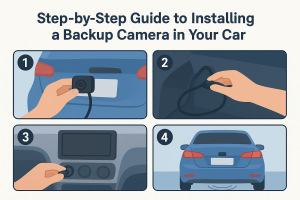
Others go for complicated ones when a simple clip-on would have been cleaner and faster to install.
5. Skipping the Return Policy
Some cameras look perfect online, but feel distracting or low quality once installed. Always buy from a place that offers a decent return window so you can test it in your own vehicle.
Also, don't trust only product images and specifications, always pay attention to feedback from those who own the same car or truck as you.
Read More: Backup Camera Systems for Commercial & Fleet Vehicles: Complete Buyer’s Guide
Conclusion
Whether you choose a rear view mirror camera and a backup camera beats relying on mirrors and guesswork alone. The right choices come down to matching the system to your biggest blind spots and driving safety.
Take an honest look at your vehicle, what you haul, and moments that make you still nervous. Once you do, the decisions usually become clear. At Rear View Safety, we focus on practical solutions that actually get used every day.
Whether you need a hassle-free backup setup or a full mirror monitor system, the goal is to deliver safer and less stressful driving.
Upgrade the Camera Safety of Your Fleet Operation At Rear View Safety