How 360 Cameras Help Fleet Vehicles Improve Safety
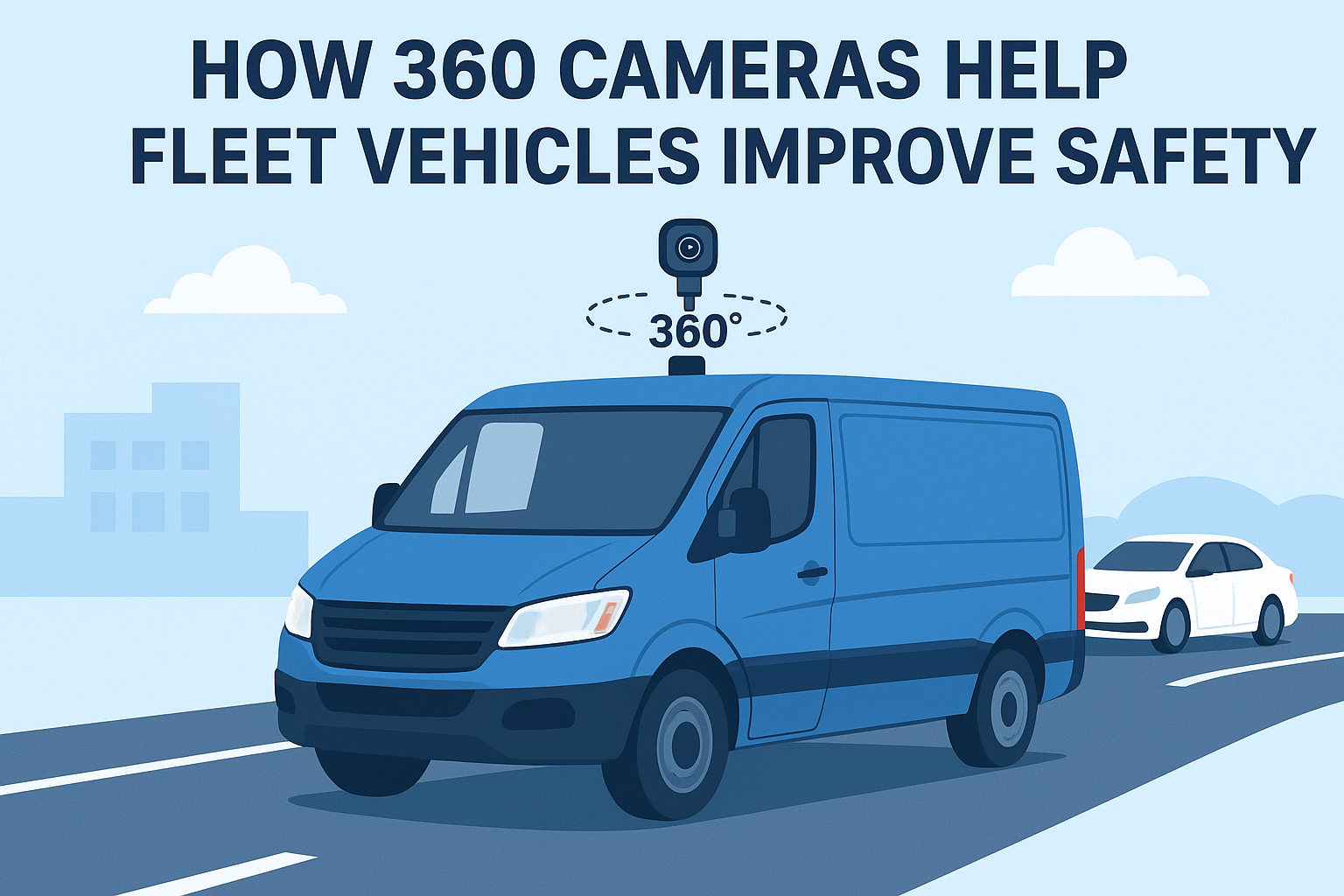
Fleet vehicles rarely collide because of the speed, but they collide because of what drivers can't see.
It can be blind spots, crowded cities, or tight customer sites every day, turning into potential risks.
For managers responsible for handling safety, these small gaps often translate to vehicle downtime, accidents, and liability claims.
This is where you need a 360 camera for car, trucks, or fleet vehicles that can change the game.
However, to understand how it helps and what operational benefits you can have.
What Are Key Safety Challenges In Fleet Vehicles?
Understanding why you need a 360 camera, first, let's explore the key safety challenges that fleet vehicles and operations face.
These challenges require more than just an incremental solution, but a technology that provides total awareness of the environment to drivers.
- Blind Spots: Even with extended mirrors, large vehicles like trucks are prone to having no visibility zones where accidents often occur.
- Congested Urban Areas:The delivery fleet needs to operate around parked vehicles, pedestrians, or congested roads, making maneuvering risky.
- Driver Turnover:: If the driver lacks experience in handling large vehicles and blind zones, it can be dangerous.
- Legal & Insurance Issues: Every road accident not just puts pedestrians and drivers at risk, but can lead to disputes, liability claims, and higher premiums for fleet operation.
- Parking & Loading Docks: Reversing into tight or not sufficient spaces can put a risk of low speed collisions and lead to repair costs which can be costly.
Also Read: Top 5 Reasons To Install A 360 Degree Camera In Your Car
How 360 Cameras Can Help You?
A 360 camera for car and truck fleets works more than a driver convenience tool.
It's a critical layer that helps in fleet vehicles' safety and ways of managing the risks on the road. It includes :
1. Makes Blind Spot Much Easier To Detect
Traditional mirrors or even a rear view safety camera depend on drivers constantly shifting their attention between different visual references.
This adds a congestive load, but also the chances of misjudgment, especially in a fast-changing environment, can put everyone at risk.
With a 360-degree camera, it reduces the mental strain by providing all blind zones in one single perspective.
Also, it allows drivers to process their surroundings much faster and make confident decisions.
2. Lower Cognitive Load During High Stress Maneuvers
Fleet drivers often have to take precision tasks under pressure, whether it's backing a truck into a busy loading dock or driving through a congested alley.
These maneuvers require constant scanning of all windows, mirrors, and sensors to keep up with any sudden change.
But a 360-degree view helps in simplifying the process. The drivers get the entire vehicle perimeter presented at a glance, which lowers the chances of missing any critical details.
Also, it makes drivers more confident and reduces their fatigue, which is another safety risk factor.
3.Protects The Vehicle’s Front End
While reversing incidents often get attention, collisions also occur at the front of the vehicle.
Whether it's bollards, curves, low barriers, or even small vehicles that sit below the driver’s direct line, which goes unnoticed easily.
Whether it's bollards, curves, low barriers, or even small vehicles that sit below the driver’s direct line, which goes unnoticed easily.
A 360 camera addresses this by providing forward-facing coverage stitched into the bird's-eye view. This allows us to see the obstacle that otherwise would go invisible.
4. Lowers Close Quarter Risks At Customer Sites
Fleet vehicles operate in low-speed and high-risk environments like warehouses, construction zones, etc.
These are often crowded with people and unexpected obstacles, leading to minor collisions, disrupting customer operations, damaging relationships, and creating safety incidents.
A 360-degree system provides a clear perimeter view, monitoring side clearance, and detecting people and safety positions in tight clearance.
5. Evidence For Protecting Against False Claims
Commercial vehicles often involve liability disputes after accidents. Without having clear evidence, the blame can easily fall on drivers, inflated insurance claims, and legal costs.
A system equipped with recording capabilities adds multi-angle video proof of what happened.
Unlike dashcams, which allow one direction, 360-degree footage captures sides, rear, and front at the time of the incident.
Read More: How 360 Vehicle Cameras Help Prevent Accidents and Reduce Liability
Why is It Important For Operational Benefit?
Installing 360 cameras not only prevents accidents and acts as a safety net. But it also improves the fleet performance, contributing to operational benefits in the long run. It includes :
- Strong safety records backed with video evidence help in handling claims and negative incidents to avoid legal and insurance premiums.
- As urban regulations tighten, fleets with advanced safety tools can be ensured as they comply with safety mandates and prepare for the future.
- As urban regulations tighten, fleets with advanced safety tools can be ensured as they comply with safety mandates and prepare for the future.
- Safe operations contribute to boosting trust and reliability, whether it's a client or customer.
- Also it helps in improving driver retention as they feel supported, less stressed and have better surrounding control.
Which One To Prefer: Rear View Vs 360 Cameras
Fleet operators relied on rear view safety as a standard tool. It provides a direct view of what's behind the vehicle, especially for smaller fleet cars and vans. It's best for :
- Adding precision to reversing into loading docks and parking bays. .
- Monitoring traffic while backing out of alleys and driveways.
- Fleets that have smaller vehicles, including limited side and front blind spots.
However, a rear view camera only addresses one risk at a time, whereas a 360 camera delivers broader protection for fleet operations. It's ideal for :
- Eliminating all sides to reduce blind spots for larger vehicles.
- Maneuvering in heavy pedestrian and dense urban areas.
- Protect against multi-angle risks that impact at customer sites..
- Provide recorded evidence from multiple angles during investigations.
However, combining both technologies, where its rear view safety camera and 360 camera add to the overall safety net, ensures lower accident risks and overall safety for fleet operations.
Also Read: Top RV Backup Cameras Of 2025: Features, Pros And Cons
Conclusion
Fleet safety is based on several factors and contributes to protecting drivers, the public, and the business itself.
While the rear view safety camera improves the accuracy while reversing, it also limits the solution.
But a 360 camera goes further in elimination, where such cameras may lack, lowering risks and improving awareness.
However, to find the right system and cameras for your fleet, we at Rear View Safety ensure you get exactly what you're looking for. It's designed to suit various vehicles, fleet operation requirements, and commercial trucks.