Why Choose Rear View Safety Backup Camera Systems for Your Vehicle
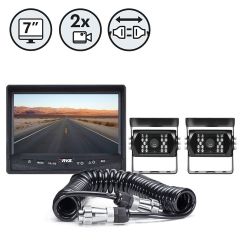
Reversing is one of those driving tasks that looks simple but rarely feels that way in real situations.
It can be tight parking layouts, uneven lighting, and objects sitting just outside your line of sight that can even be stressful in a short reverse.
Using mirrors in such situations only gives you part of the picture, but doesn't show everything behind you. That's where the RVS camera systems add multiple angles, getting you a direct and wider view.
To understand why it’s an ideal setup and whether it suits your vehicle, here’s a breakdown.
What Sets Rear View Safety Camera Systems Apart?
Once you start comparing systems, the gap between basic and well-built setups becomes obvious.
Whether you use a reverse camera system for car or for other vehicles, the setup helps you in:
1. Adds Clear Visibility Even in Tricky Conditions
Some cameras struggle when the lighting changes, making it tricky to understand details. RVS systems tend to hold their clarity better, so edges stay defined, and objects don't blur into the background.
That becomes especially useful when you are parking close to curbs or dealing with low obstacles.
2.Coverage that Goes Beyond the Center View
A wider viewing angle means you are not locked into a narrow rear view. It also allows you to see more of what is happening across the back of the vehicle, including movement from the sides, which traditional mirrors often miss.
3. Built to Keep Working in Harsh Weather
Daily driving means your system needs to perform regardless of the environment and conditions.
RVS systems are built to handle heat, rain, dust, and road vibration without taking a toll on your operation.
Also, they stay consistent, instead of losing their image quality and reliability over time.
Must Read: 5 Reasons Why Vehicle Camera Systems Aren't Meeting Expectations
Key Features That Improve Driving Safety for Your Vehicle
What stands out is how they work together. The view feels steady, readable, and predictable, which is what improves driving safety.
RVS camera systems include practical features that directly reduce accidents and frustration. Including:
|
Key Features |
What You Notice While Driving |
|
Wide-angle lens (130°+) |
You spot movement from the sides earlier instead of reacting late |
|
Night vision support |
Dark parking areas feel manageable instead of uncertain |
|
Waterproof build (IP67/IP69K) |
The camera keeps working through rain, dust, and car washes |
|
Clear display output |
You don’t have to second-guess distances |
|
Parking grid lines |
Lining up in tight spots becomes more intuitive |
|
Anti-glare screen |
The image stays visible even in strong sunlight |
|
Stable signal |
No flickering or sudden dropouts mid-maneuver |
Which One to Choose Between Wireless and Wired Systems?
Choosing between wireless and wired systems comes down to consistency and convenience.
1. Wired Systems
Wired setups tend to be more dependable since the connections stay stable.
This is especially crucial when you are using the system on a regular basis. It includes images being more consistent even in a busy environment.
Also, there is little to no delay when shifting into reverse. The systems are fit for larger vehicles or frequent use.
However, the only real downside is that it takes extra time during installation.
2. Wireless Systems
Wireless setups are easier to get up and running. Also, the installation is quicker and less involved. It is suitable for everyday but lighter use.
On the downside, the performance can vary slightly depending on the surroundings. However, it is highly convenient, which often outweighs the downsides.
Also Read: Cargo Safety in Commercial Fleets: Reducing Risk and Liability
Should You Choose or Skip RVS Camera Systems?
If you are often dealing with situations like tight parking, limited visibility, or a larger vehicle, having a clear rear view can help.
Also, trailer alignment or low-light parking becomes a lot simpler as you don't have to depend on a guessing game.
It's especially useful when :
- Parking spaces are tight or unpredictable
- Rear blind spots are noticeable
- You drive SUVs. vans or trucks
- Reversing at night is common
- Precision matters especially in towing
If your current setup already has a clear, wide view and you rarely deal with tight or complex parking situations, you might not feel the need right away.
That said, standard visibility has limitations after running into a few tricky situations.
What to Expect for Installation & Everyday Usability
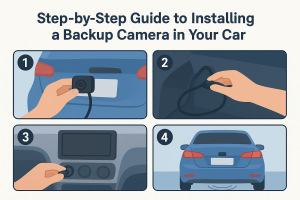
Most systems are straightforward to set up, and once they are in place, you do not need to spend much attention.
Most RVS kits include everything you need, such as universal brackets, plug-and-play wiring, or wireless transmitters, along with clear instructions.
|
Aspect |
What It Feels Like in Practice |
|
Installation time |
Usually done within a couple of hours |
|
Compatibility |
Works across most cars, SUVs, trucks, and RVs |
|
Mounting |
Flexible enough to fit different vehicle layouts |
|
Display setup |
Can use a dedicated monitor or an existing screen |
|
Daily use |
Turns on automatically, no extra steps needed |
Also Read: Get Seamless Visibility Across Trailer Fleets with Air Vue Backup Camera
Conclusion
Rear visibility is one of those things you only notice when it is not enough or becomes a daily headache, especially in tight spaces, low light, and blind spots.
A dependable reverse camera system for cars removes a lot of friction, whereas the RVS camera system focuses on a clear and stable view.
Ready to stop guessing every time you reverse? Explore the full range of RVS camera systems today and give your vehicle the reliable backup visibility it deserves.
Upgrade Your Fleet System at Rear View Safety
FAQs
Can RVS camera systems be installed on older vehicles?
Yes. The kits use universal mounting hardware and adapters that work with most older cars and trucks, even without a factory display.
How does the RVS system hold up in harsh weather?
They are waterproof and dustproof, so they handle rain, snow, mud, and high-pressure car washes without losing picture quality or getting damaged.
Do RVS camera systems really help at night?
They do. Many models provide clear visibility up to 50 feet in complete darkness, so you can spot obstacles instead of guessing.